Planning
Goals
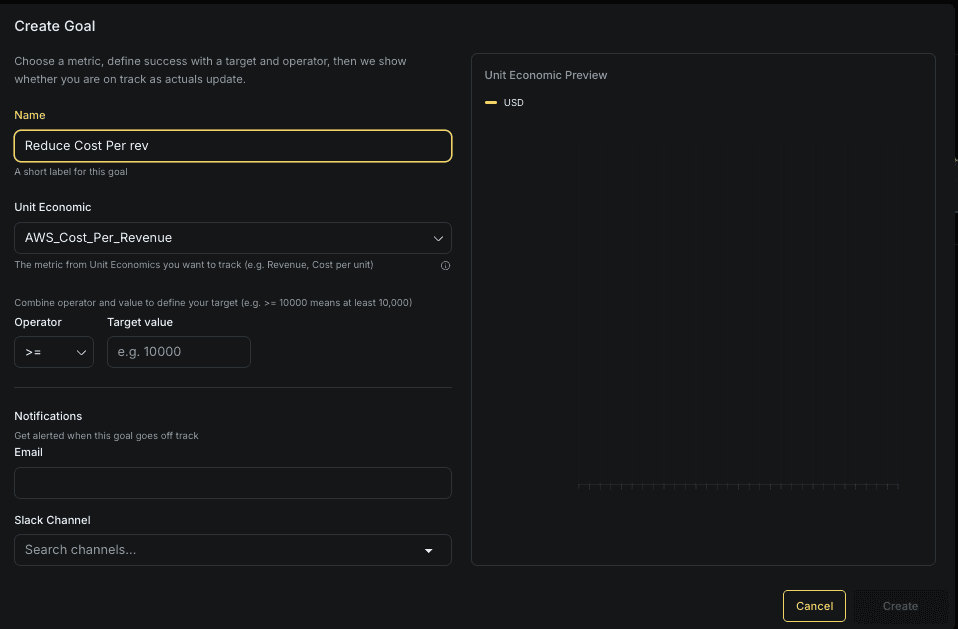
Not every target is about staying under a number.
Some teams want to bring a cost down by a fixed percentage, some care more about a unit economics ratio like cost per customer or cost per transaction, and some are tracking something else specific to how their part of the business is measured. Goals let you set any of these, scoped to your whole organisation or down to a specific part of your attribution graph, so the target sits against the same structure your spend is already organised around. Once it is set, progress updates automatically as your underlying data changes, giving you a running view of whether you are on track rather than a number you have to calculate.
A finance team building the annual plan might set two goals at once: an org-wide target to cut total cloud spend by ten percent, and a product-specific goal to bring cost per customer down by fifteen percent for the core product. Because both sit on the same attribution structure, finance can see at a glance whether the product-level target is pulling its weight against the wider organisational number, or whether one part of the business is quietly making up for another. When the plan gets revisited mid-year, the same goals carry the conversation instead of starting from a blank spreadsheet.